Hidden in plain sight: how live environments demand delivery without disruption

Key takeaways
Live infrastructure delivery is increasingly defined by how change happens without disrupting the passengers, systems and operations around it.
Heathrow’s security programme shows how planning, logistics and stakeholder coordination are as critical as engineering in operational environments.
The most successful live-environment upgrades are often the least visible, with progress happening in the background while services continue uninterrupted.
The most complex infrastructure today is not defined by scale alone. It is defined by whether it can be delivered while everything around it continues to move.
Across transport, the challenge is increasingly the same: capacity demand is rising, passenger expectations are higher and there is little tolerance for disruption. Hubs do not shut down to allow for change. They evolve while fully operational, which places as much emphasis on planning, logistics and stakeholder coordination as it does on engineering.
That is what defines delivery in a live environment. It is not simply about managing constraints, but about understanding how operational systems function day to day, then sequencing work so change can be introduced without destabilising them. In practice, that calls for disciplined interface management, careful assurance and the ability to adapt quickly when conditions shift.
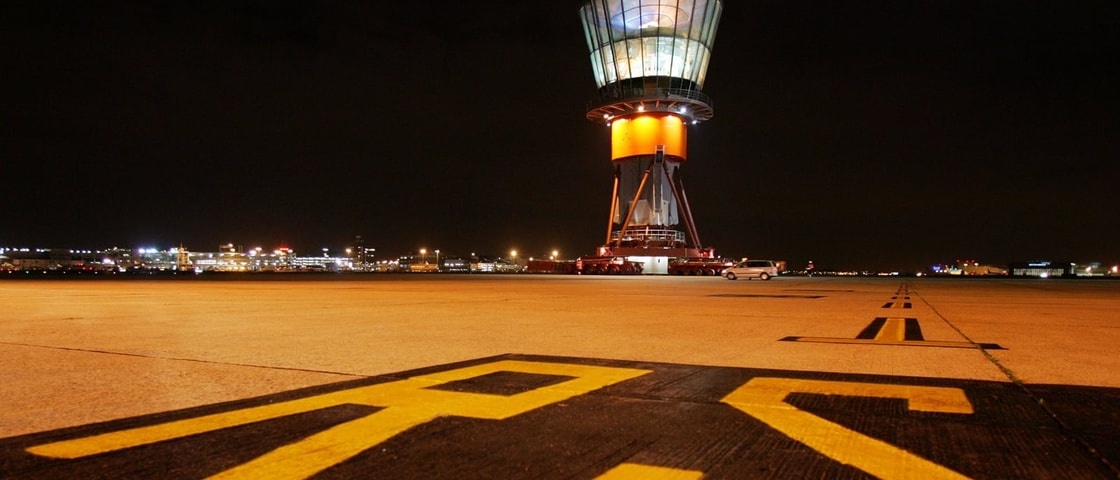
Few places test those capabilities more clearly than Heathrow airport.
A system under pressure
Mace Construct has worked at Heathrow for more than 25 years. Over that time, its role has extended across more than 400 live frameworks and projects on a 1,227-hectare campus. Experience at that scale builds more than site knowledge. It develops an understanding of how operational, technical and stakeholder interfaces behave under pressure, and what it takes to deliver change without interrupting the system around it.
As Britain’s busiest airport, it handles more than 84 million passengers each year, with peaks of over 250,000 people moving through the terminals in a single day. Demand continues to grow, placing increasing pressure on systems that were never designed for this level of volume or complexity.
Security sits at the centre of that pressure. Every passenger goes through it, and even small inefficiencies quickly compound at scale. The system must become faster, more consistent and more resilient, without compromising safety. That is the backdrop to Heathrow’s next generation security programme. Spanning Terminals 2, 3, 4 and 5, it will see approximately 236 advanced screening machines installed across the airport.
This is not simply a technology rollout. It is a live transformation of critical infrastructure, requiring the programme to be planned around passenger flows, operational dependencies, assurance requirements and the realities of working within one of the UK’s busiest transport environments.
Complexity you don’t see
What appears to passengers as straightforward construction work is really a highly managed delivery exercise. In live environments, complexity is rarely contained within the asset you’re building itself. It sits in access, sequencing, logistics, operational interfaces and the need to coordinate multiple parties around a moving system.
The security programme exemplifies many of these challenges. Each scanning machine weighs 3.5 tonnes and is, of course, made of highly specialised components. Bringing this equipment into a live terminal environment is not straightforward. No two areas are the same, which means each installation has to be assessed and planned individually, from bespoke lifting and tracking systems to temporary works and craneage. The challenge is not just to move heavy equipment safely, but to align with terminal operations and wider programme sequencing.
In Terminal 4, that extends to the building itself, with sections of the glazed façade removed to create sufficient access. It is a reminder that delivering change in a live environment often goes beyond the asset and into the fabric around it.
Moving any built components, plant or other equipment through operational spaces demands careful choreography. The challenge is not only engineering but maintaining control of the sequence: knowing when areas can be accessed, how adjoining operations are protected and how work can progress without creating knock-on disruption elsewhere. That combination of adaptability, coordination and control is what defines successful delivery in a live environment.
Working while everything moves
In a transport hub, there are multiple overlapping operations from retail to hospitality and sanitation to security. These demand the absolute minimum of disruption and maximum consumer experience during normal working hours. A significant obstacle to construction productivity.
Our teams at Heathrow have adapted to carry out a significant amount of work in tight overnight windows to minimise disruption. As the programme reaches critical stages, those patterns flex, extending into earlier starts, daytime working and weekends to maintain progress.
That requires a different approach to planning. Coordination becomes more immediate and decision-making more tightly linked to live conditions. Delivery teams need to understand not only the programme, but the environment around it and how quickly constraints can change.
Contractors must prioritise productivity in these environments, particularly where access, logistics and competing operations intersect, and how working patterns continue to evolve in response. Ultimately, success in these operational settings requires sensitivity and awareness of all the groups that keep an airport running and adaptability to maintain a works schedule that supports them, without compromising the programme.
Security in motion
A unique challenge to airports is the tension between not just live operations and the efficient throughput of millions of passengers, but also the critical nature of activities impacting national security and safety. Construction depends on sustained alignment across airport teams, the airline community, UK Border Force, SO15, terminal operations, security, building control and the London Fire Brigade. In practice, that means more than consultation. It requires active interface management, clear decision routes and a shared understanding of how works affect the live operation. Maintaining that alignment is what allows progress to continue without destabilising the wider system.
The security programme sees an added layer of assurance embedded into the process. Every machine passes through a central logistics facility before installation and is checked again at site, including radiation testing, before it is brought into situ. That discipline matters as much as the physical installation itself, because operational readiness cannot be treated as a final step.
Infrastructure upgrades like this are rarely visible to the people moving through the airport. And that is the point.
Success in a live environment is measured by how little is noticed. Systems continue to operate, passengers continue to shop, dine and move without impediment. Meanwhile, change happens in the background.
This scheme at Heathrow illustrates a wider shift in infrastructure delivery. The hardest challenges are no longer only about what is being built, but about how change is introduced where operations cannot pause. That is where experience in live environments becomes most valuable: not as a marketing claim, but as a practical capability in planning, logistics, assurance and stakeholder coordination.
Related insights
-
Shaping legacy through social value
Perspective