The face behind the hoarding: Why good stakeholder management is critical to the success of urban infrastructure projects

Key takeaways
Embed stakeholder engagement within delivery teams to build trust and identify issues early, protecting the programme-critical path.
Use transparent and consistent communication, visible accountability, early notice of works, honest updates, and regular touchpoints to sustain community support and reduce friction.
Listen through data, track complaints to spot patterns, investigate new impacts quickly, and adapt methods to balance safety, disruption, and local needs.
Delivering major infrastructure in urban and regulated environments is both complex and challenging, not just technically, but also societally. Construction touches thousands of lives and if engagement is an afterthought, it can become one of the biggest risks to a programme. That complexity matters even more when set against the scale of the UK Government’s planned £700+ billion infrastructure investment pipeline. With so many nationally significant schemes due to come forward in parallel, the system has far less tolerance for delay, uncertainty or avoidable disruption, making smooth, predictable delivery an urgent priority.
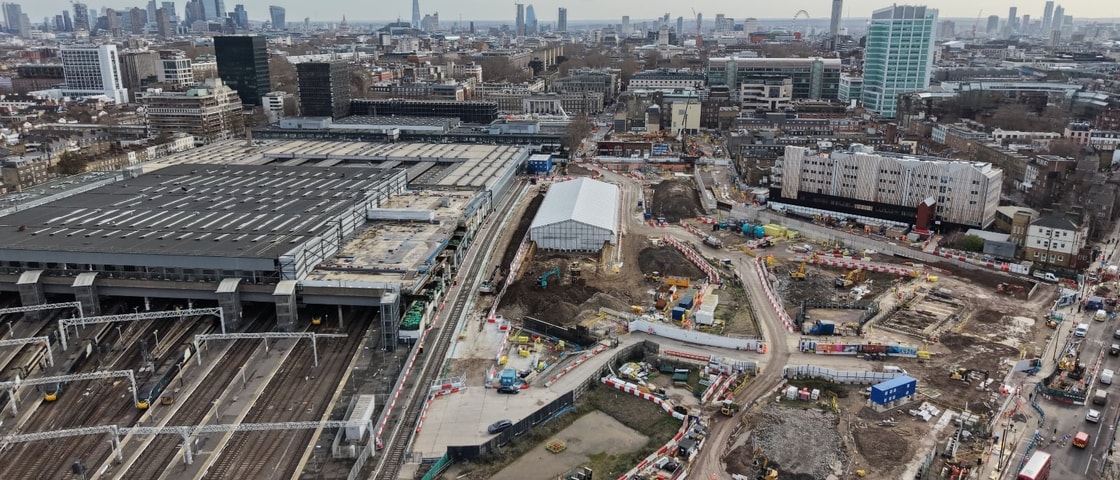
At HS2 Euston, we’re working in one of the most constrained station developments in the country with more than 70 stakeholder interfaces, live Network Rail and TfL stations, and an invested residential community. Despite the inevitable disruption this has caused to people’s daily life, we have aimed, from the outset, to minimise our impact, and resolve issues quickly and collaboratively.
What’s been the secret to our success over a decade long programme? Treating stakeholder engagement as a core part of our delivery and investing time in understanding the surrounding community and involving them in the development journey.
Engagement as a delivery strategy
Urban infrastructure programmes succeed when they build trust. Complex station developments are inherently impactful to neighbours which makes engagement fundamental to delivery. The key risks rarely sit in construction capability alone. Instead, they lie in political alignment, consent sequencing with residents and managing disruption within dense urban environments.
At Euston our engagement specialists are not siloed, but sit within programme, planning, and operational teams, as well as on community forums. This ensures stakeholder considerations inform decisions as they are made. Our strategy is therefore aligned with programme phasing and delivery governance, including early warning processes, highways consents and commercial risk reporting.
Most importantly, we communicate the integrated plan with the stakeholder community and bring it to life by identifying the holistic impact on the local area. This level of integration enables potential issues to be identified earlier and managed proactively, helping us to protect the programme’s critical path, while reducing escalation and discontent.
Protecting the programme through transparency
People, understandably, want to know who is accountable for what is happening on their doorstep. They want someone real they can call, who will listen and act. Too often, all they see is a logo, or the impacts of construction (noise, dust and traffic) with no human connection. They feel that construction is happening to them, not with them.
We’ve tried to change this at Euston with an authentic, personal approach.
We’ve adopted a policy of transparency. That has meant the team getting out there attending public meetings, talking to people and, crucially, listening. When residents and businesses can put a face to a name, trust builds, enabling and increasing our ability to deliver. Our commitment to this ethos of transparency and respect is evidenced by our Gold recognition in the Considerate Constructors Schemes National Site Awards.
We believe in giving as much notice of works as possible. While the standard is three months, we go the extra mile, giving 12 months, or sometimes even two years notice of our programme. Before commencing works, we like to ask ourselves “how will this impact the small business down the road? The restaurant next door? The people studying for their exams?”
The key is to provide our stakeholders with consistent communication across multiple touch points. We create newsletters that provide regular updated and milestones on the projects, whilst also transparently laying out delays and their causes. This brings our stakeholders on the full journey of the project.
For those who consent to more regular updates, we have also built a contact list who receive urgent changes to the programme. The aim is to foster investment and recognition between communities and those working on the scheme, increasing local support.
Listening through data
Actively and intelligently analysing complaints data goes beyond the standard playbook set out by the CCS. It requires a recognition of patterns and an ability to mitigate seemingly isolated issues before they become a broader problem for you and your stakeholders. Our PowerBI dashboard at Euston logs every complaint and allows us to spot patterns, and do deep dives into the types of issues, the time of day, the location and any repeat themes. When something unexpected emerges, we investigate.
One such example was where several local people had flagged an unfamiliar noise. When we investigated it, we discovered it was an automated safety alert from our plant. This was a new feature, and so residents weren’t used to hearing the sound. We also have an institution nearby who were concerned about the noise interfering with exams. By reviewing the data, engaging openly and exploring alternatives, we found other ways to maintain safety without relying on the sound, including using additional banksmen. We listened, we reviewed, we acted, and as a result we found a solution that provided both safety and noise reduction.
As further station developments come forward across London and other urban hubs, they too will face constrained sites and complex stakeholder environments. With such a critical need for updated infrastructure, these schemes cannot abide the reputational and productivity damage that misaligned community engagement can inflict. The contractors who protect their programmes will be those who treat engagement as a core delivery discipline, placing stakeholders at the heart of the construction journey.
That is what we have built at Euston and is what we plan to bring to every future infrastructure programme.