Proving the Playbook’s Promises: a practical guide for private-sector construction

Key takeaways
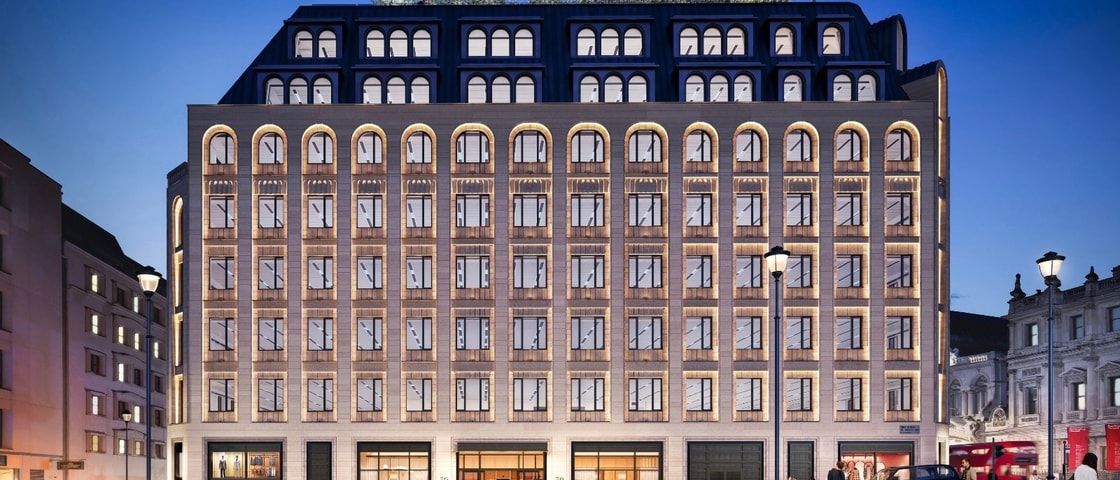
30 Duke Street St James’s, a GPE development, highlights how the Private Sector Playbook can be implemented to drive measurable value, creating a high performing London scheme grounded in collaboration, transparency and innovation.
Circular construction can be achieved at scale when partners align early and work together to shape low carbon, re-use led design decisions.
Early supply chain involvement and real-time digital insight is strengthening certainty, accelerated decision-making, and improved programme outcomes.
The Private Sector Construction Playbook offers a clear route towards achieving a more productive and sustainable future.
For Mace Construct, its '10 drivers for success' have been more than guidance - they have shaped the project strategy of 30 Duke Street St James’s from day one and continue to do so as the development moves towards completion. The former French Railways House will serve as a leading example of circular economy principles in action, becoming the current largest commercial reclaimed steel initiative in the UK.
The Playbook sets clear expectations: collaborate early, involve the supply chain, standardise where possible and drive continuous innovation. Mace Construct has identified four key principles that drive success when utilised in combination, by using the Playbook not as a checklist, but as a strategic pillar for better outcomes.
Forming effective partnerships
Agreeing goals at the outset is key. A one-team approach helps build trust, align ambitions, and deliver lasting social value, with the most successful projects anchored in strong collaboration.
One of the earliest interventions at 30 Duke Street St James’s was a full Playbook review workshop at project launch stage, supported by Mace Business School, whose dedicated experts design and deliver interactive, engaging and tailored training for our supply chain partners. Bringing together our integrated project team, the session built a shared appreciation of project priorities and set a collaborative tone that now defines the project.
This then became the springboard for tailored working groups, with the team consistently ensuring the Playbook remained a living tool rather than a static document.
Together with early procurement and a tightly managed Tender Event Schedule, that collaborative momentum quickly delivered tangible programme gains. Early material procurement enabled the closure of most provisional sums, significantly de-risking the programme at an early stage. And by collectively identifying opportunities such as smarter phasing, parallel activity scheduling, early package procurement, and clearer decision gates, a 4 week improvement on the start of the superstructure and façade was achieved.
With shared purpose, collaboration strengthens, accountability increases, and delivery accelerates exponentially.
Involve the supply chain early
A core chapter and underlying theme is early supply chain involvement, which has been central to shaping critical design choices and decisions from the outset.
Working in collaboration with GPE on 30 Duke Street St James’s, early supply chain appointment introduced several UK firsts in sustainable materials, advancing industry standards in low carbon development. The project’s steel frame is constituted of 78% reused steel, repurposing 450 tonnes of reclaimed steel sourced from a GPE donor building, the open market, and the former French Railways House.
In addition, the intertwining of heritage with contemporary design allowed for restored and reused mosaic lettering, 21 tonnes of reused Portland stone, and for the majority of the existing marble to be reclaimed.
The team introduced Hydro CIRCAL 100R aluminium, becoming the first UK commercial project to use 100% post-consumer scrap aluminium with a near-zero carbon footprint, whilst also delivering ORAÉ® glass for the first time in London on a tier one contractor commercial scheme, achieving an estimated 42% reduction in embodied carbon compared with standard glass.
As the Playbook emphasises, the earlier engagement happens, the broader it’s impact on shaping a project’s success. That’s because transparency on procurement strategies builds confidence and enables shared understanding of the value proposition brought by supplier selection.
Enabling digital information flows across the whole life of the asset
The construction industry is adopting data and digital information flows at an increasingly rapid speed. Data-led processes accelerate delivery, cut costs, and reduce project risk - enabling smarter, more efficient buildings in return. At 30 Duke Street St James’s, this Playbook principle has shaped how the team captures, analyses, and shares project information across disciplines.
Mace Construct’s digital approach uses real‑time data to drive faster decisions, strengthen certainty and enhance programme control. Dashboards for slipform, steelwork and precast turn live progress data into clear insights, helping teams spot trends and react early.
Instead of relying on retrospective reporting, the project runs on dynamic information flows that enable predictability. This data‑led approach is already delivering results: slipform productivity reached 115%, supported by faster communication and improved on‑site coordination. As the data portfolio grows, benchmarking becomes easier, strengthening continuous improvement across future projects.
A single digital project page acts as one‑source‑of‑truth that brings together tools, standards, models and reporting. By simplifying how information is accessed and used, the team has improved transparency, coordination, and shared understanding of performance.
Together, these measures bring the Playbook’s intent to life, using structured data and digital technologies to enable faster, clearer communication.
Promoting innovation and continuous improvement
Continuous improvement has been embedded in the project from the outset. Early discussions brought the right expertise to the table, creating a culture of innovation which maximised opportunities for sustainable design, conservation and material re-use.
Early alignment enabled low-carbon choices to be embedded far earlier in the design and delivery process, allowing circularity and carbon-reduction opportunities to be deployed at scale.
As early as RIBA Stage 3, 194 tCO₂e was saved through superstructure decisions, with a further 744 tCO₂e saved from reclaimed steel and around 250 tCO₂e saved from 5,800 m² of reclaimed raised access flooring.
The project also adopted MMC at scale, strengthening buildability, coordination, and installation quality. The entirety of the pre-cast was façade Lv 1 to Lv 5 and 80% of the Lv 7 to 8 mansards were prefabricated, together with several MEP items utilising off site manufactured components.
A model for future delivery
Through early and open collaboration, digital transparency, supply chain partnership and a relentless focus on continuous improvement, the team has created a project environment that is safer, more sustainable, and more integrated than conventional delivery approaches typically allow.
30 Duke Street’s St James’s innovations will continue to inform wider industry practice, proving that when Playbook principles are applied with intent, the impact extends far beyond the project boundary.
Related insights
-

Now is the time to upgrade city offices
Perspective