Key takeaways
£85
million invested
80%
of Stair 2 built off site, saving 120 labour hours
500m³
of radiation-shielded concrete poured at the start of main works
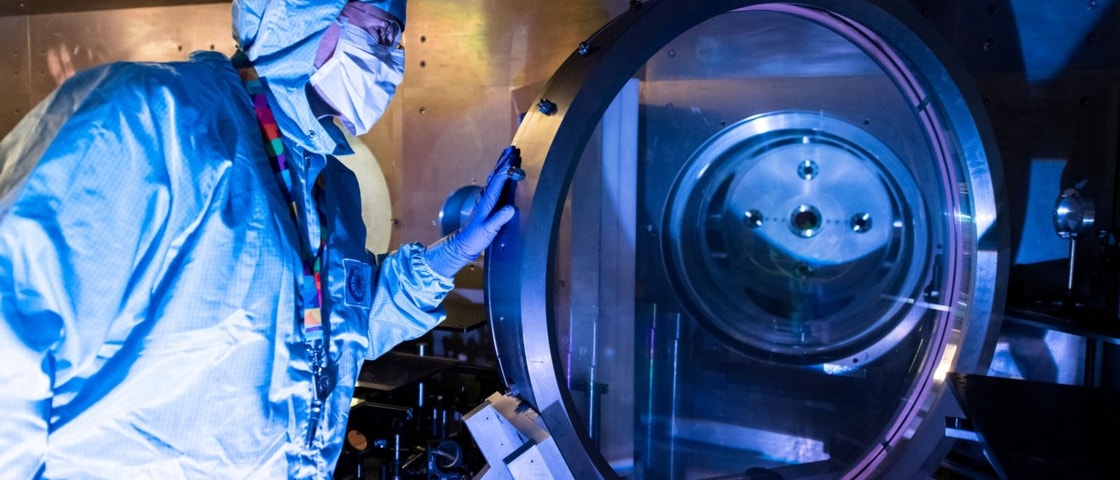
- Housing the world's most powerful laser inside a large target area bunker, a 20-petawatt system that will unlock new breakthroughs in fusion energy, astrophysics and fundamental physics.
- Advancing the United Kingdom's leadership in high energy science, enabling cutting edge research into clean energy, particle acceleration and innovations that support future cancer treatment technologies.
- Maintaining uninterrupted operations across a live, vibration sensitive research campus through meticulous planning, complex service diversions and collaborative delivery.
Pushing the boundaries of science and technology, Vulcan 20-20 is a groundbreaking project commissioned by the Science and Technology Facilities Council’s (STFC) Central Laser Facility in Oxfordshire. Backed by an £85 million investment from UK Research and Innovation (UKRI), the upgrade will ensure the UK’s Vulcan laser facility continues to be a world class research hub.
At its core will be the UK’s most powerful laser, a 20-petawatt system equivalent to a million billion, billion times brighter than the brightest sunlight in the Sahara Desert. This extraordinary capability will enable advanced research into fusion energy, astrophysics and fundamental physics. Scientists will use the facility to explore clean energy solutions, study plasma behaviour and develop particle acceleration techniques with potential applications in cancer treatment.
Delivering Vulcan 2020 requires a carefully coordinated programme of complex refurbishment to the existing laser facility alongside the construction of a major new extension. Central to the upgrade are two seven-metre-tall targeting bunkers with walls up to two metres thick, constructed using radiation resistant concrete designed to withstand beams a billion times hotter than sunlight. A major early milestone was the successful delivery of 500m3 of this specialist concrete, transported by more than 70 lorries, marking a significant step in forming these secure environments.
Innovation in construction is critical to meeting the project's safety, quality and programme requirements. To minimise time spent on site and reduce disruption across the live science campus, our constructiontoproduction (C2P) strategy will play a key role, enabling 80% offsite prefabrication and saving around 120 labour hours. Prefabrication of the external MEP riser will be completed and installed in two controlled lifts, eliminating the need for prolonged working at height and significantly reducing associated risk while improving overall productivity.
Sustainability is also a major focus, with 43% of the primary steel frame manufactured from reused material and supported by environmental product declarations. This choice is expected to save around 92 tonnes of embodied carbon on this project alone. Reused steel typically generates around 70 kg of CO₂ per tonne, compared with approximately 2,500 kg of CO₂ per tonne for traditional blastfurnace steel, highlighting the significant carbon benefit of this approach.
In addition, the project incorporates ground-granulated blast-furnace slag (GGBS) cement replacement within selected concrete elements – GGBS is a byproduct of iron production and can replace 30–70% of Portland cement in concrete mixes – significantly reducing emissions associated with concrete.
Constructing such a sophisticated facility within a live and vibration-sensitive science campus presents unique challenges. From intricate service diversions to precision engineered environments, every element requires close collaboration and technical excellence. Drawing on experience from previous developments at Harwell Science and Innovation Campus, we are working closely with stakeholders to maintain uninterrupted operations while delivering a facility that will help redefine what is scientifically possible.
Other projects
-
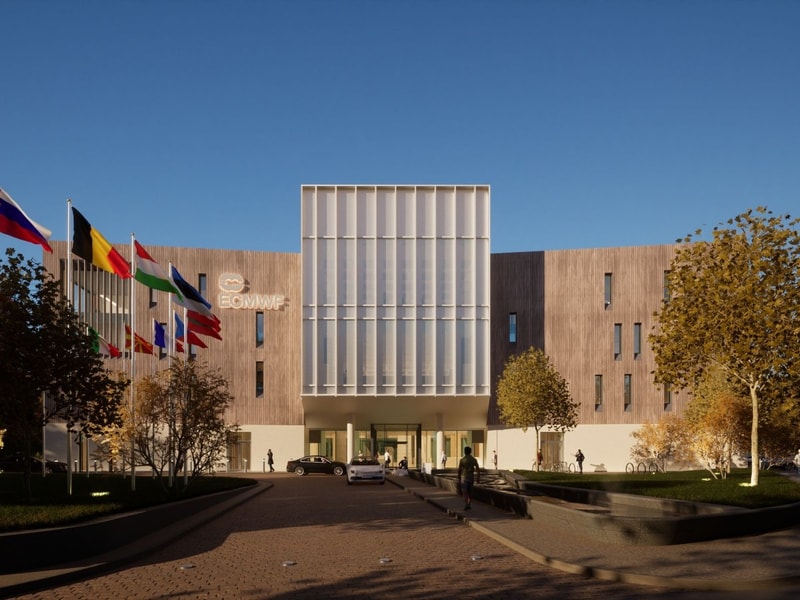
Sustainable headquarters for advanced weather research
Project
European Centre for Medium-Range Weather Forecasts (ECMWF) Headquarters
-
-

-

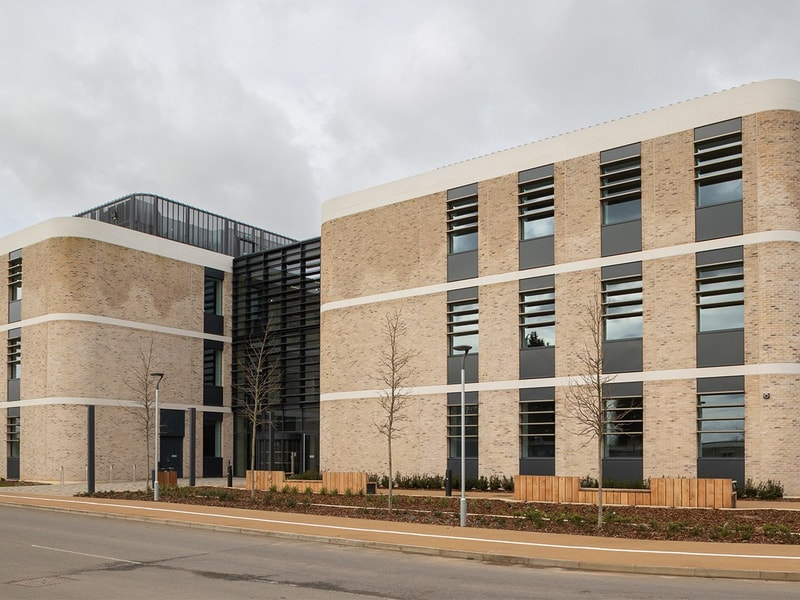
Catalysing science breakthroughs at The Oxford Science Park
Project
The Daubeny Project at The Oxford Science Park
-

-


