Key takeaways
30
tonnes of operational carbon saved annually
349
tCO₂e saved through material reuse
85%
improvement in thermal efficiency compared to baseline
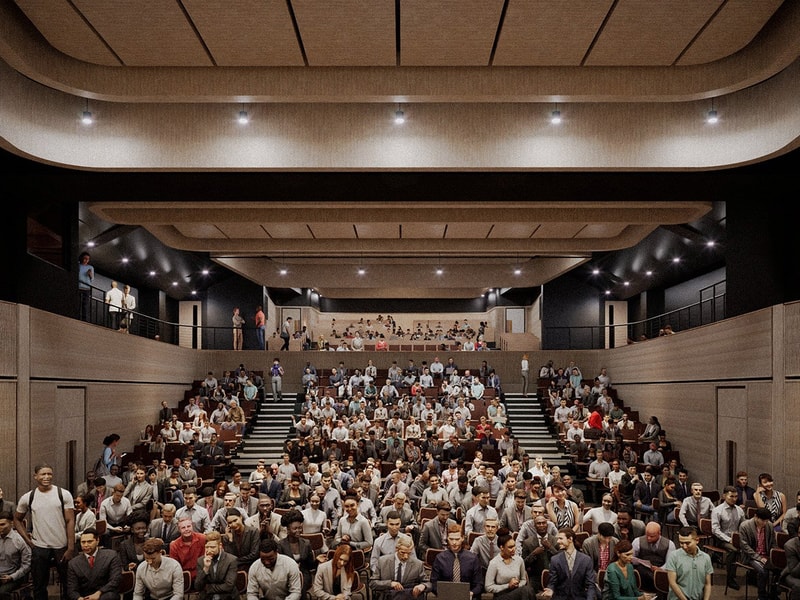
- Delivering future-ready spaces for discovery, collaboration, and innovation – including next-generation labs, lecture halls, and social hubs.
- Championing circular construction to achieve 323 tCO₂e savings on the structure alone.
- Boosting the regional economy by creating hundreds of jobs and apprenticeship opportunities.
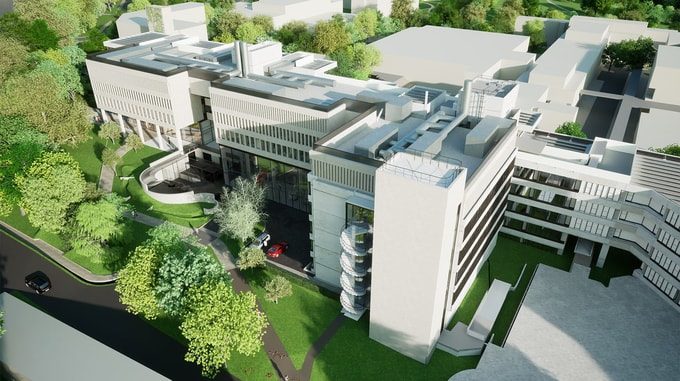
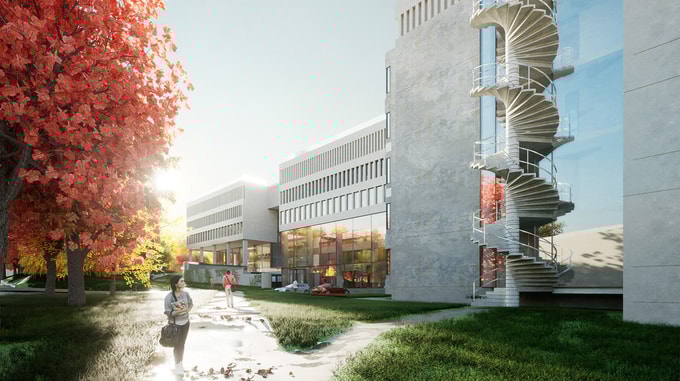
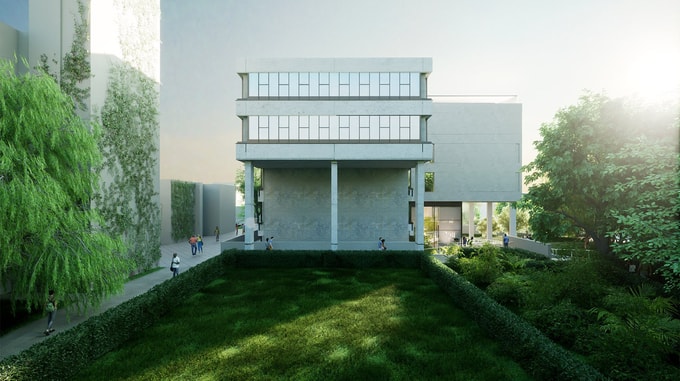
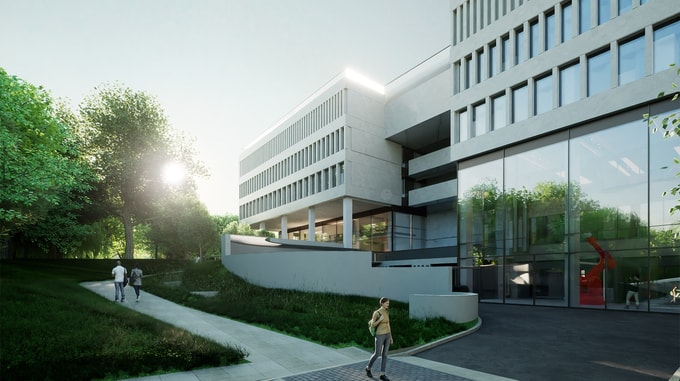
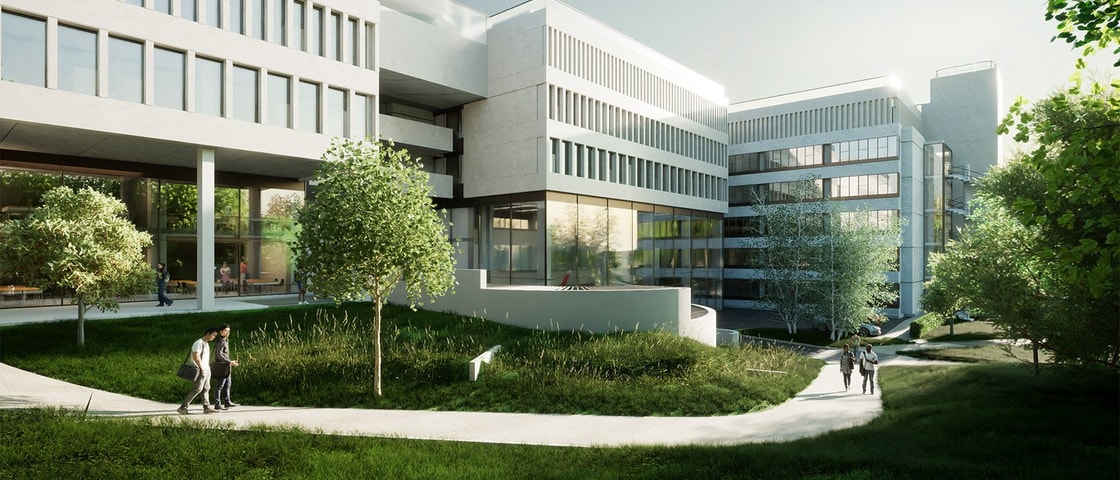
A bold new chapter is unfolding at the University of East Anglia (UEA), where a mid-century architectural icon is being reimagined for a low-carbon future. The Lasdun Wall – famed for its striking geometric form – is undergoing a four-phase transformation that blends preservation with progress.
Originally built in the 1960s, the Grade II listed development comprises of four interlinked buildings designed to read as one unit. The first phase upgrades Building 3 to house world-class science facilities and teaching spaces, while Buildings 4, 5, and 6 remain operational, continuing UEA’s research activities throughout the programme.
Advanced construction technologies and sustainable practices will significantly reduce the building's carbon footprint to support UEA's net zero carbon goals. The project embraces a whole-life carbon approach, embedding circular economy principles throughout the construction process. Prioritising material reuse has already led to carbon savings of 349 tCO₂e.
Beyond environmental impact, the refurbishment plays a key role in supporting the local economy. The refurbishment will create hundreds of jobs and apprenticeship opportunities, underpinning UEA's role in the community.
From its architectural legacy to its next chapter as a sustainable, state-of-the-art teaching and learning hub, Lasdun Wall symbolises bold ambition. It’s not just a building; it’s a blueprint on how universities can lead the way in environmental responsibility and world-class learning – wall to wall.