Shaping legacy through social value
Key takeaways
Social value delivers the greatest impact when it creates practical community benefits and supports efficient, resilient delivery across construction and development projects.
Investing early in skills, careers and inclusive employment builds long‑term workforce capacity, reduces delivery risk and strengthens programme certainty on complex schemes.
Collaborating with local partners builds trust, minimises disruption and ensures construction projects contribute positively to their surrounding environments during delivery and beyond.
The need to deliver high‑quality developments sits alongside growing expectations for visible, positive contributions to the environments in which we work. Meeting both demands requires a shift in mindset: away from viewing social value simply as a planning requirement to recognising it as an opportunity to create lasting benefits.
Social value spans a wide range of outcomes, from environmental initiatives to wellbeing support. One of the most immediate and enduring places to start, however, is with people. The opportunities created through employment, skills investment and community engagement have the greatest potential to deliver tangible benefits while strengthening the resilience of projects and the industry.
Social value is often framed in broad terms while its impact is felt most clearly when it is embedded into day-to-day activity during construction. The challenge is less about a lack of ambition from developers or local authorities and more about how to translate that ambition into on-the-ground activity. Our four principles outline how focusing on careers, skills and community can transform social value into something practically embedded into project delivery.
Diversifying the hiring pool
A flexible approach to hiring is an apt starting point. By broadening access to employment, projects can tap into a wider talent pool while supporting sustainable workforce development within the communities where they operate.
This is increasingly important in an industry facing persistent skills shortages. Expanding who we reach out to can not only address immediate resourcing challenges but improve resilience across projects, reducing reliance on a constrained labour market. It also creates opportunities for people who may not follow traditional pathways into construction.
Partnering with initiatives such as the DIVERT programme, who support young people released from custody, demonstrate how alternative routes into employment can engage harder‑to‑reach community members who may have limited options. When incorporated with a project, this approach benefits both the development and the local area by boosting employment rates.
Investing in skills and progression
Entry into the industry is only one part of the picture. Delivering meaningful social value also depends on what happens after people are hired. Supporting training, upskilling and clear career progression helps build a workforce that can grow alongside the industry, improving retention and strengthening capability over time.
The need for this investment is clear. With only 17% of employees receiving job‑related training, the gap between current skills provision and future demand continues to widen.
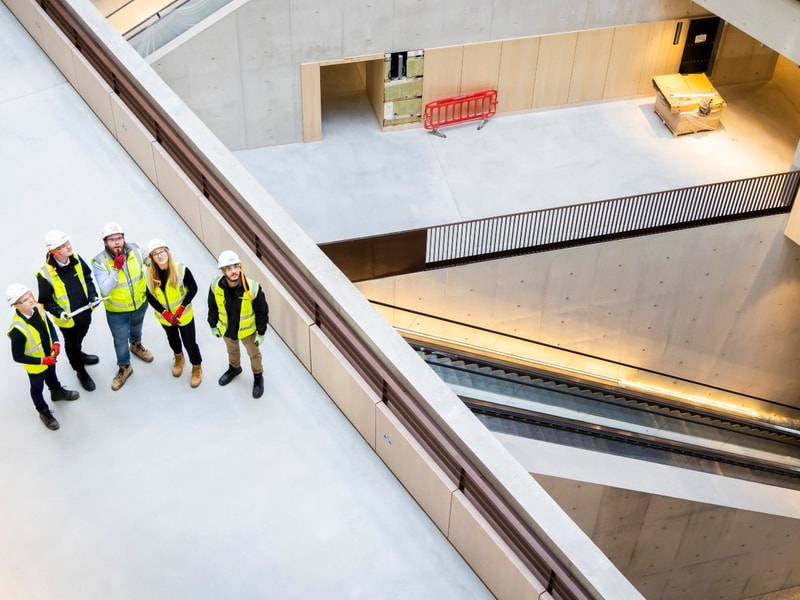
During National Apprenticeship Week 2025, our teams at Peterborough Court and Daniel House hosted Julia Kinniburgh from the Department for Education and Mark Reynolds to discuss how the industry can better close the skills gap. This year, our Social Value team is building on that momentum by attending careers events across London, showcasing Mace and supply chain apprenticeship opportunities. Together, these engagements help link project delivery with broader workforce strategies, ensuring that developments contribute to long‑term skills growth.
Promoting construction as an attractive career
Attracting the next generation into construction requires early, meaningful engagement. Despite the breadth of roles and opportunities within the sector, perceptions can still be shaped by outdated assumptions, limiting interest among young people and those who influence their choices.
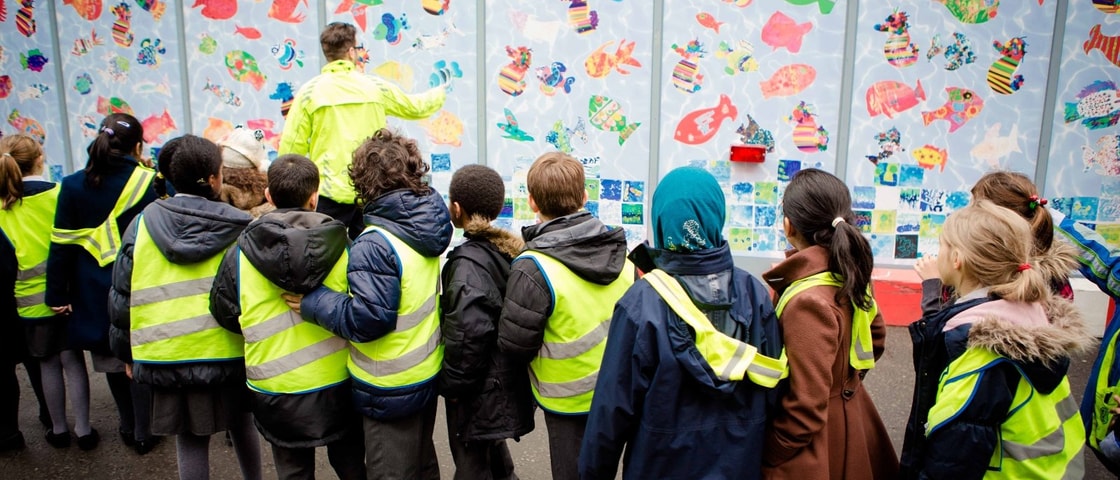
Opening up live sites provides a powerful way to challenge those perceptions. As part of our T‑Level placement programme, students from a local college visited our project at Berkeley Square, gaining first‑hand insight into how the development is delivered and the range of careers involved. These in-person experiences help make construction more visible, accessible and relevant at a critical decision‑making stage in a child’s life.
Engaging educators plays an equally important role. Teachers from a local school were also invited to tour another one of our sites, providing them information to better understand the industry and more confidently promote construction careers to their students both now and long-term. By investing in these touchpoints, projects can support a stronger future talent pipeline rooted in local people.
Working with local partners
Social value is most effective when it meets real needs. Achieving this requires collaboration with local organisations and councils to ensure initiatives are relevant and responsive to the context of each development.
At 30 Duke Street, joint modern slavery stand‑down sessions were held in partnership with the client, reinforcing shared responsibility and ethical practice across the supply chain. At 1 Victoria Street, engagement took different forms: from hosting a tea party for a nearby community centre to running site tours for residents, granting them visibility into how potential disruption was being managed.
These activities help build trust and transparency, demonstrating how developments can integrate more positively into their surroundings while construction is underway. But such moments have lasting impacts long after delivery, from changing perceptions and building lasting relationships.
When social value is integrated with project delivery, its impact extends well beyond individual initiatives. Projects that are trusted locally are better positioned to progress smoothly, with fewer challenges linked to disruption or misunderstandings. Workforces that are supported through inclusive hiring and skills development are more resilient, contributing to greater certainty across programmes.
Most importantly, developments that engage meaningfully with people and places are more likely to be viewed as long‑term assets rather than temporary construction sites. In this way, social value moves from being a “nice‑to‑have” to a practical tool for delivering better outcomes for communities, the projects themselves, and those responsible for bringing them to life.
Related insights
-
Retrofit without compromise at Lasdun Wall
Case study
-

From pilot to progress
Case study