Cutting the silos to accelerate advanced manufacturing delivery
Key takeaways
Advanced manufacturing is a major economic driver around the world
Competing desires for end-product agility and project clarity threaten delivery of next-generation facilities
Early integration, communication, and product-focus are keys to successful programme delivery
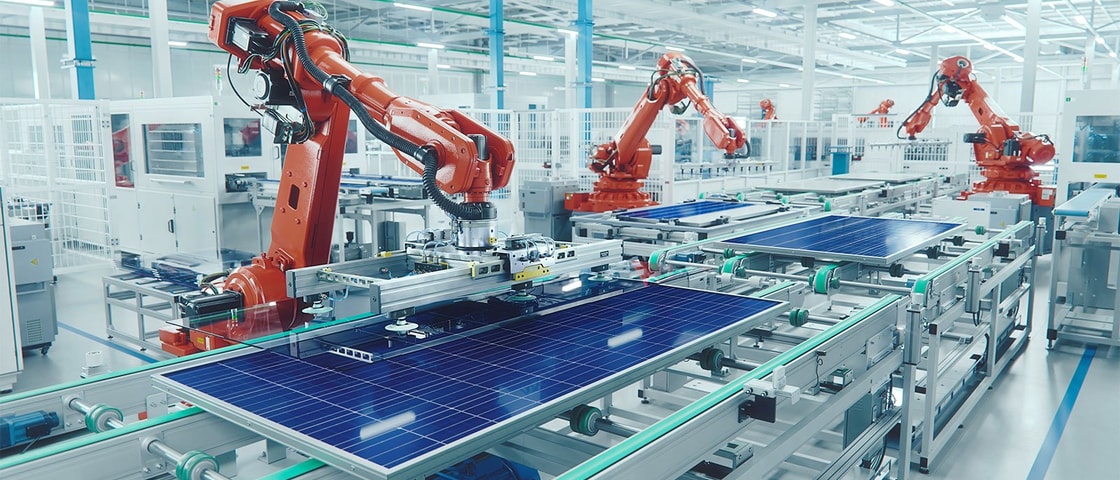
The advanced manufacturing revolution, Industry 4.0, is already in full swing.
It is transforming a broad range of industries - ranging from batteries to semi-conductors; cars to medical devices - reshaping how nations put the essential building blocks to drive their economies forward and maintain competitive advantages in a globalised world.
Looking at the UK, advanced manufacturing contributes £82 billion in annual Gross Value Added, making it a cornerstone of the national economy. Meanwhile in the United States, manufacturing contributes to 10% of the country’s GDP and, for every $1 spent the sector, generates $2.69 in total economic activity, making it one of the highest economic multipliers among all sectors.
However, despite such progress, there remains a historic problem threatening to curtail fast developments: the ongoing disconnect between the manufacturing and construction sectors. Addressing this divide is not just a matter of improving efficiency - it is vital for delivering the next generation of facilities to power a sustainable, technologically advanced future.
Divergent approaches to programme delivery
Manufacturers and construction partners have long operated on parallel tracks with distinct mindsets.
Manufacturers are typically product-centric, wholly focused on whatever product they are set to produce - be it advanced materials like cutting-edge batteries or semi-conductors, or future facilities like data centres. Their delivery mindset revolves around iterative development, flexibility, and technological optimisation. Change is not just expected; it is welcomed as new innovations emerge over the life of a programme.
Construction firms, by contrast, are far more project-centric. Their priority is the timely and efficient completion of buildings and facilities, requiring maximum clarity and direction at the start of a project. For constructors, ambiguity and late-stage changes are risks to be mitigated, not opportunities to be seized, as they can put strict timelines, complex supply chains and tight budgets in jeopardy.
Understandably, these two separate approaches can clash when combined in a delivery partnership, resulting in miscommunication, friction and delays. Programmes can stall when construction teams press for certainty, only to find manufacturers requesting late design changes or new requirements as the vision evolves.
This divergence is not just a technical or managerial issue. It is a matter of national and global significance.
Governments worldwide are incentivising and empowering businesses to build new facilities at unprecedented scale, particularly in the transition to clean energy, electric vehicles, and high-value manufacturing. These assets are central to strategies for economic resilience, net-zero ambitions, and technological leadership.
In this context, the old model of siloed teams and sequential delivery is no longer fit for purpose. The gap between manufacturers’ need for flexibility and constructors’ demand for clarity must be bridged if we are to deliver the facilities our economies urgently require.
Meeting this need requires a fundamental shift in how delivery teams are organised and engaged.
Start conversations as early as possible
Engagement between manufacturers and construction partners should begin as early as possible, preferably at the inception of a programme before key decisions have been made. By building integrated delivery teams from the outset, stakeholders can set realistic expectations, flag risks early, and collaboratively chart a course forward. This early integration is essential for aligning interests, understanding constraints, and preventing costly missteps later in the programme.
This is especially important for ensuring simplified and deliverable facility designs right from the outset. By clearly understanding what constraints and expectations are in place, manufacturers and construction firms can create projects that are effectively designed to be commissioned. This single upfront requirement can save unnecessary stress at the end of a project when speed is paramount.
Spot opportunities for flexibility whilst maintaining sight on delivery
Effective delivery in advanced manufacturing demands a delicate balance: setting a clear direction from the start, while retaining the agility to adapt to new technologies, changing requirements, or unexpected risks. This requires honesty and openness in communication, as well as a willingness to revisit assumptions as the programme evolves.
The choice of partners and supply chains is critical here. Success depends not just on technical expertise, but on the ability to collaborate, problem-solve, and embrace change together. Outsourcing or building fragmented teams can undermine this process, creating barriers to the flexibility and clarity required for successful delivery.
Build integrated teams united around the same goal: the end-product
Ultimately, the most effective way to overcome these delivery challenges is to unite integrated teams around the common purpose of delivering the best end-product possible for the project. Rather than siloing construction and manufacturing units, delivery teams must be empowered to share risk, communicate continually, and remain jointly focused on delivering a world-class facility that meets the real needs of the market.
This approach does not just reduce delays or cost overruns. It fosters innovation, accelerates time-to-market, and creates cultures of shared accountability; qualities that are essential as competition for talent, resources, and market share grows strong.
However, it demands that delivery and construction partners shift their mindset, moving from project-centric focuses on delivery towards joining manufacturers on keeping a laser-focus on the needs of the end-product, not just the immediate task in hand. Building integrated teams will blur these boundaries, enabling more effective and productive delivery of future advanced manufacturing sites.
The years ahead will see an explosion of investment in advanced manufacturing, driven by shifts in technology, public policy, and consumer demand. Delivering on this promise will require more than technical expertise or capital: it demands a new way of working, one that breaks down historic barriers and unites all parties around a shared vision.
By embracing early integration, open communication, and joint ownership, manufacturers and constructors can deliver the transformative facilities our societies need. The prize is not just efficient programme delivery, but a new model of industrial collaboration.
Related insights
-

Annual Report 2024
Report
