
Key takeaways
$16
bn 15-year megaproject
2.4
mile-long tunnel
95,000
jobs expected to be created
In 2024, the Gateway Development Commission, jointly established by the States of New Jersey and New York, appointed our Mace-Parsons-Arcadis joint venture (operating as MPA Delivery Partners) to lead delivery of the US$16 billion Hudson Tunnel Project. This significant, 15-year megaproject is regarded as the nation’s most urgent infrastructure priority to establish a reliable and resilient transit connection serving the world’s largest economic mega region.
The Hudson Tunnel Project will provide long-term resiliency and reliability to improve commuter and inter-city transit operated by NJ Transit and Amtrak, eliminating a single point of failure serving a regional economy that drives 20% of the nation’s gross domestic product.
As delivery partner, we are working alongside Gateway Development Commission to manage the complex programme and extensive works.
Major elements include the construction of nine miles of new transit tracks between New York and New Jersey; a new, 2.4-mile, two-tube tunnel beneath the Hudson River; and subsequent rehabilitation of the antiquated 1910-era North River Tunnel to address age and flood damage constraints.
Upon completion, the project will make four tracks available on the route between New Jersey and New York, two in the new Hudson River Tunnel, and two in the renewed North River Tunnel.
The project is already creating local jobs and business benefits. Over the life of the programme, it will create more than 95,000 jobs and generate $19.6 billion in economic activity supporting construction. Ultimately, it holds greater promise to reduce social, environmental and economic impacts associated with congestion and service delays, while promoting community development and improving workforce productivity, public safety, and connectivity throughout the region.


Other projects
-

-

-

-

-
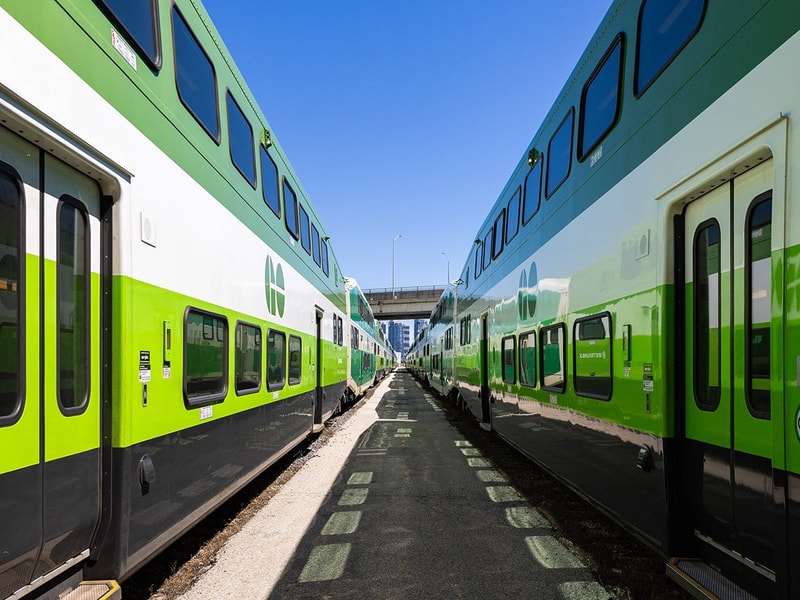
The largest transit infrastructure investments in Canadian history
Project
Metrolinx GO and Subways expansion programs
-

On track for resource efficiency with Network Rail
Project
North-West and Central (NW&C) regional portfolio energy assessment


