
Key takeaways
454,000
sq ft of new lab space
3600+
tonnes of carbon saved
5%+
biodiversity net gain and 600 kWh solar PV provision
- One of the largest Circal 75 projects in the UK, using recycled aluminium curtain walls, reducing carbon by 600 tonnes
- Supports up to 70% wet or dry labs on each floor
- UK first innovation in alternative Geostructual design solution through dynamic post-tensioned raft slab
The Daubeny Project at The Oxford Science Park is a landmark £191 million development, creating three state-of-the-art laboratory and office buildings. This expansion will add c454,000 sq ft of premium space, addressing the critical demand for high-quality facilities in the thriving regional life sciences sector.
Majority owned by Magdalen College, Oxford, the Park supports discovery, innovation, and entrepreneurship. The new buildings are designed with sustainability and occupant well-being in mind, featuring biodiverse landscaping, extensive photovoltaic energy generation, and optimised building orientation for natural light and energy efficiency.
Due to the site’s poor ground conditions and a high-water table, the initial Stage 3 designs required over 1,000 piles and pile caps, along with two challenging levels of car parking below the water table. In a first for Great Britain, Mace is implementing innovative ground engineering solutions that will save over 3,600 tonnes of embodied carbon through the use of an active post-tensioned raft removing the need for piles, pile caps and associated works and a 75% recycled aluminium facade.
The build features minimal use of steel and cement-based materials, with recycled aluminium saving over 600 tonnes of embodied carbon. The design emphasises natural light and flexibility, with a façade that maximises internal natural light without the need for cooling. Each floor is adaptable for future flexibility, incorporating a capacity for up to 70% wet or dry labs.
Occupant well-being is central to the design, featuring biodiverse landscaping, spacious receptions, atriums, and walkable pedestrian areas. The project incorporates air source heat pumps, cutting-edge ventilation, and a modern façade design that ensures energy efficiency, supporting carbon reduction and utilising renewable energy sources in a large photovoltaic array. The development also includes generous undercroft parking, with provision for EV charging and 537 cycle spaces.


Other projects
-
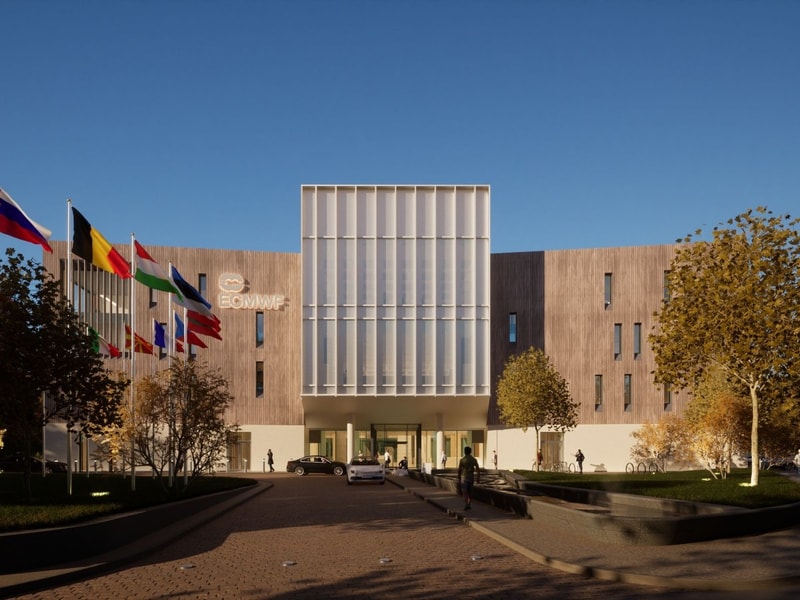
Sustainable headquarters for advanced weather research
Project
European Centre for Medium-Range Weather Forecasts (ECMWF) Headquarters
-

-

-

-

Expanding University of Oxford’s biomedical facilities
Project
Kennedy Institute of Rheumatology and Nuffield Department of Medicine
-


