Key takeaways
78%
of the structural steel used in the development is reclaimed
1st
Commercial development in the UK delivering CIRCAL 100
100%
recycled-content ORAÉ® glass adopted
- Preserved and repurposed below ground structural elements from the former French Railways House and 48-50 Jermyn Street, setting the foundation for a circular construction approach.
- It introduced several UK firsts in sustainable materials, advancing industry standards in low carbon development.
- Will serve as a leading example of circular economy principles in action, shaping future best practice across the sector.
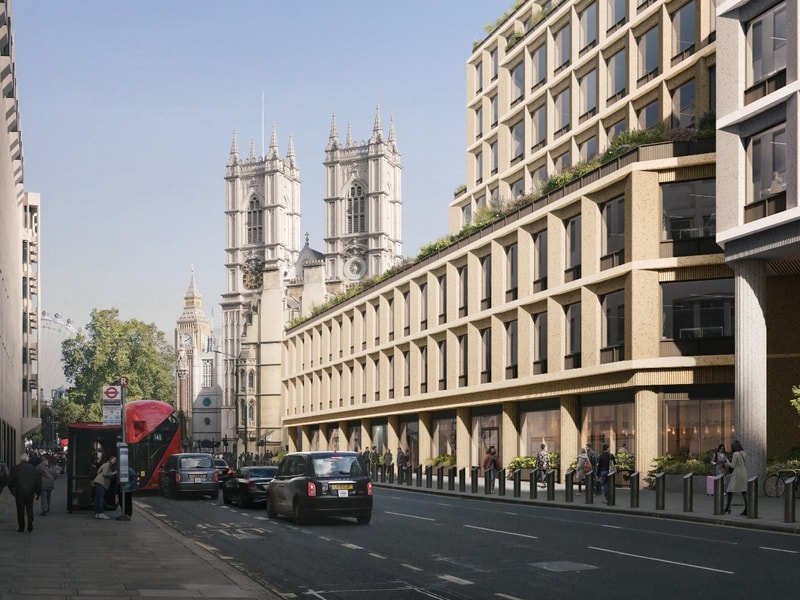
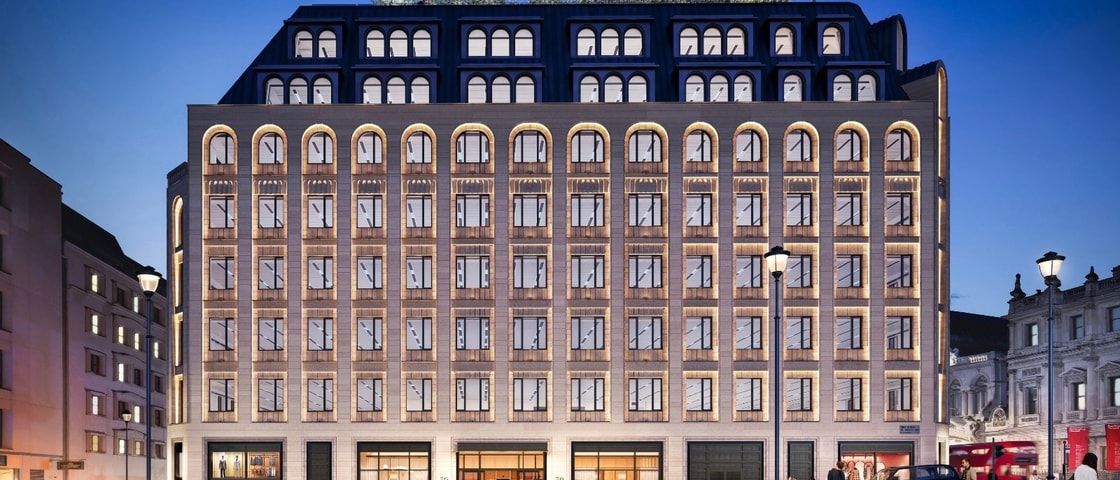
In the heart of St James’s, on the historic site of the former French Railways House and 48–50 Jermyn Street, 30 Duke Street St James’s emerges as one of London’s most forward looking workplaces and a standout champion of the circular economy.
Spanning 68,000 sq ft, this fully electric and fossil fuel free development introduces four striking terraces and showcases an ambitious approach to near zero carbon design. At 30 Duke Street St James’s, more than 78% of the structural steel used in the development is reclaimed and sourced from the GPE City Court Place donor building, the former French Railways House, a second GPE donor building, and the open market. This bold reuse strategy delivers an estimated saving of around 744 tonnes of carbon dioxide equivalent compared to UK average assumptions.
Innovation continues throughout the project. It becomes the first commercial development in the UK delivering CIRCAL 100R, an aluminium product created from 100% recycled post consumer scrap. The building also adopts ORAÉ® glass, made from 100% recycled content, saving a further 30 tonnes of carbon dioxide equivalent.
As the largest reclaimed steel initiative in the United Kingdom, the scheme’s eight storey structure uses extensive repurposed steel, totalling 450 tonnes, and generates 744 tonnes of carbon dioxide equivalent in savings.
17% of the used Portland stone is reclaimed directly from the existing building, with 33,645 kg of existing Portland stone reused, preventing almost 62,000 kg of new stone excavation. In addition, 3,600 kg of existing granite is recycled from the original structure, further reducing the project’s material footprint.
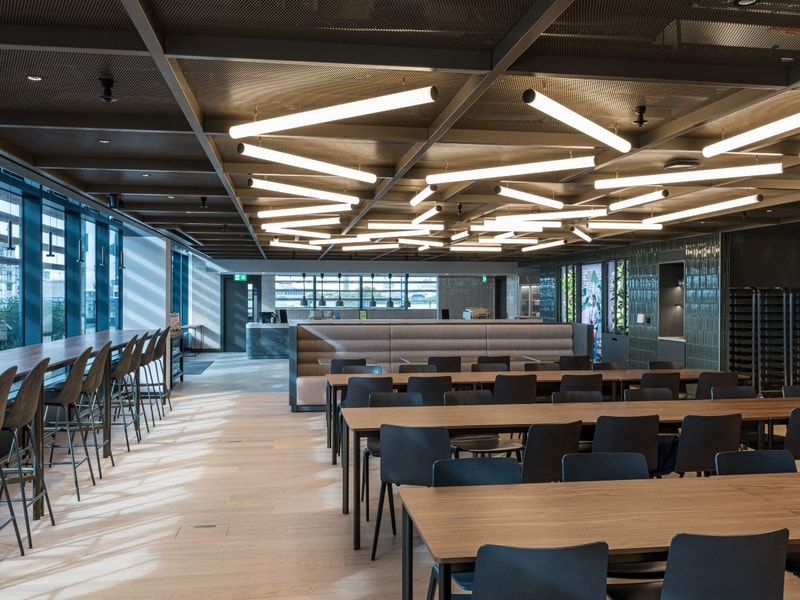
The circular approach continues inside the building, where 100% of the existing marble has been reclaimed, the historic French Railway mosaic reinstated, and 16,560 no. of reclaimed raised access floor delivered, providing a 250 tonne carbon dioxide saving.
Together, these achievements set a powerful new benchmark for sustainable development in London.
The project not only proves what is possible when circular principles guide design, it also establishes a blueprint for a future built environment that is cleaner, smarter, and far more responsible.